


IBIẸRIYE GUILD
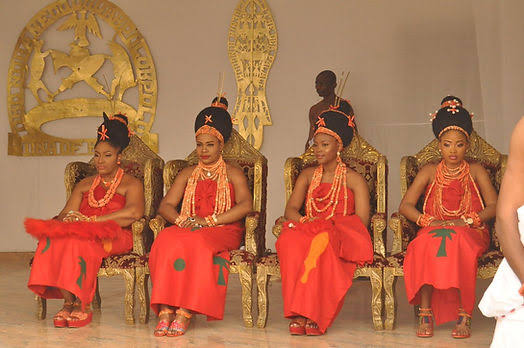 |
| Wives of Oba Ewuare II |
The Ibieriye guild is a specialized hereditary and occupational association (egbe) within the socio-political and ritual hierarchy of the Kingdom of Benin. Its members serve in the Ụghaẹnmwẹn Ọba (Royal Palace), specifically attending to the domestic and ceremonial needs of the olori (royal wives of the Ọba). The guild operates within the complex structure of palace service groups that collectively uphold the dignity, sanctity, and daily functioning of the monarchy.
Historical Context of Ibieriye Guild
The origins of the Ibiẹriye guild can be traced to the consolidation of palace guilds under the reign of Ọba Ewuare the Great (c. 1440–1473), a period during which Benin court life became increasingly codified. Like other palace service guilds, the Ibiẹriye formed part of the intricate system of eghaevbo n’ogbe (palace societies) that combined administrative, ritual, and domestic functions. The institution of female palace attendants was deeply intertwined with notions of royal seclusion, sacred kingship, and the maintenance of ritual purity within the ẹrinmwin-obo (the spiritual domain of the king).
Roles and Functions of Ibieriye Guild
Members of the Ibiẹriye guild were entrusted with:
• Assisting the olori with personal care, dressing, and household management within the ikpoba (royal harem).
• Managing domestic spaces not accessible to male palace officials, thereby safeguarding the privacy and ritual seclusion of the royal wives.
• Supporting court rituals involving the olori, including offerings to palace shrines and participation in festivals such as Ugie Ivie and Ugie Ewere.
The guild’s duties were considered not merely domestic but deeply ceremonial, as palace wives played roles in ensuring the prosperity, fertility, and spiritual protection of the kingdom.
Ritual Protocols and Purification Ceremonies
A distinctive cultural regulation governs the personal lives of Ibiẹriye members. Before a guild member may marry an individual outside the guild, they are required to undergo a formal isusọ ẹsẹ (ritual purification) ceremony. This rite, supervised by senior guild elders and sanctioned by palace authorities, serves multiple purposes:
• It symbolically severs the member’s ritual obligations to the palace.
• It ensures that the sacred trust and esoteric knowledge acquired in royal service are ritually neutralized before the member integrates into the wider community.
• It reaffirms the central Benin belief that palace service is a sacred duty, carrying both spiritual power and social restriction.
Such protocols parallel those found in other palace guilds, such as the Iwebo (regalia keepers) and Iweguae (palace household managers), where members also observe rites before leaving active service.
Leadership and Governance
The guild is led by an Odionwere (senior elder), a respected figure responsible for overseeing operations, maintaining discipline, and liaising with higher palace officials, including the Iye Oba (Queen Mother) and palace chiefs. The Odionwere also plays a ceremonial role in the initiation of new members and the execution of purification rites.


COMMENTS